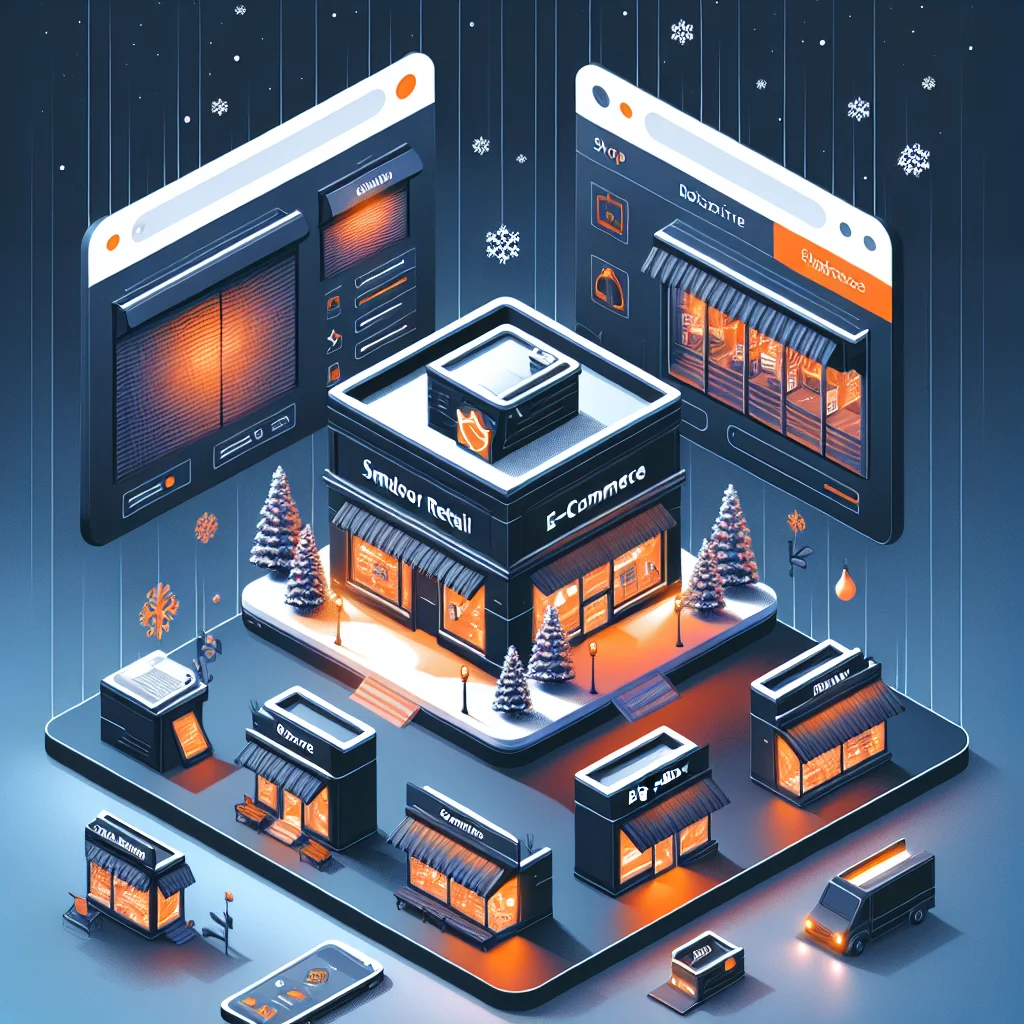
Uber-like trends 2024-2025: concrete opportunities for Quebec SMEs
Uber-like business models – on-demand platforms, platform economies, instant services – are profoundly transforming the way Quebec consumers buy, travel and interact with local businesses. For a Quebec SME, this means not just surviving in the face of the giants, but above all seizing new digital opportunities: on-demand services, sales automation, personalized customer experience and expansion beyond the neighborhood. In 2024-2025, Uber-inspired trends will integrate with AI chatbots, CRM and e-commerce, paving the way for hybrid models that are highly accessible even for small teams. This article examines the key trends and suggests concrete courses of action for Quebec SMEs that want to draw inspiration from Uber… without having to invest like Uber.
1. The Uber-like platform economy: where do we stand in 2024-2025?
Before talking about opportunities for Quebec SMEs, we need to understand the real weight of Uber-type models in today’s economy. According to the OECD, the share of digital platforms in certain service sectors has more than doubled over the past ten years, accelerating since 2020. Uber illustrates a wider movement: delivery, transport, home services, tourism, education and even healthcare are now influenced by platform logic.
In Canada, Statistics Canada already estimated that around 8% to 10% of workers had at least once generated income via digital platforms (transport, delivery, micro-tasks, etc.), a proportion that has been growing steadily since 2016. On a global scale, the value of the “on-demand economy” was estimated at over US$300 billion in 2023, and several consultancies anticipate annual growth of 15-20% by 2028.
For Quebec, this means :
- Massive adoption of on-demand services in urban centers, particularly in Montreal, Quebec City, Laval and Gatineau.
- Standardization of fast, intuitive and geolocated mobile experiences: ordering, payment, real-time tracking.
- Pressure on service SMEs (restaurants, local shops, professional services, craftsmen) to offer digital customer journeys comparable to those of the major platforms.
Consumers are no longer just comparing one restaurant to another, but the overall digital experience: “Is it as simple as Uber or DoorDash?”. A PwC report on customer experience already highlighted that 73% of consumers consider experience to be a determining factor in their purchasing decisions, sometimes even more important than price or product(PwC Global Consumer Insights).
For a Quebec SME, the good news is this: we’re not asking you to become an Uber, but to achieve a minimum level of “digital ubiquity”: online visibility, simplified appointment or order booking, responsive customer service and centralized customer data. It is precisely in this field – AI, automation, CRM and e-commerce management – that partners like Nuaweb can transform a simple showcase site into a veritable mini local platform.
2. Quebec consumers: what they now expect from SMEs
Uber-type trends have shaped very specific expectations among Quebec consumers. Even if not all the studies focus directly on Uber, they reflect the same reflexes: immediacy, mobility, transparency and personalization.
Some key findings from recent data on digital commerce and consumer behavior:
- Online shopping in Quebec continued to grow after the pandemic: the Canadian Online Retail Survey showed a marked increase between 2019 and 2023, and a stabilization at a level well above pre-2020 levels.
- The majority of consumers now expect to be able to complete all stages of a purchase or booking online: research, comparison, ordering, payment and tracking.
- Young adults (18-34), heavy users of Uber, Uber Eats and similar apps, are imposing their digital standards on all other sectors, including traditional local services.
In concrete terms, Quebec customers expect more and more :
- 24/7 availability of information and interactions: chatbot or form, appointment booking, detailed FAQ.
- Mobile simplicity: a well-optimized responsive website, or a web app that loads quickly and avoids friction.
- Transparency on prices, timescales and cancellation policies, inspired by the Uber model with pre-trip estimates.
- Follow-up and notifications: confirmation, reminder, delivery or appointment notification.
- Quick responses: waits have dropped from 24-48 hours to minutes or hours, especially for simple requests.
These expectations are closely linked to the technologies already used by the major platforms: conversational AI, process automation, customer data integration. The advantage for Quebec SMEs is that these technologies are rapidly becoming democratized. AI-based chatbots and simple automations can now be deployed at costs suited to a small business.
For example, a service SME in Montreal can, without a native application, offer :
- A modern, custom-developed website (see website creation) with Uber-style appointment booking (time slot, immediate confirmation).
- An AI chatbot available 24/7 to answer frequently asked questions, qualify requests and capture leads.
- A CRM integration that centralizes all interactions for personalized follow-up without adding to the administrative workload.
Quebec consumers don’t care whether you’re an SME or a multinational: they rely on experience. So your challenge is not to copy Uber in its entirety, but to integrate the few features that really change the perception of your brand and facilitate the transition to purchase.
3. How Uber can inspire you to rethink your SMB business model
Taking inspiration from Uber doesn’t mean launching a cab app. Rather, it means taking certain structuring principles and adapting them to your reality as a Quebec SME, in your specific sector.
Among the main principles that can be transposed :
- Platformization: connecting several players (customers, service providers, partners) via a central digital entry point.
- On-demand: offer services when the customer needs them, with fast booking options.
- Data-driven: make decisions based on real data (behavior, history, retention).
- Ultra-simplified user experience: as few clicks, forms and friction as possible.
Here are a few concrete examples for a Quebec SME:
1. On-demand home service for craftsmen and professionals
Plumbers, electricians, computer technicians, cleaning services, home physiotherapists can offer a system inspired by Uber :
- Online calendar with available slots in real time.
- Clearly displayed rates and quick cost estimates.
- Instant confirmation and notifications (e-mail/SMS).
- Geolocation or clearly defined service areas.
2. Local retail with fast delivery
Neighborhood businesses can position themselves as local alternatives to the international giants:
- Creation of an optimized online store (see Nuaweb e-commerce solutions) with clear catalogs and updated stock.
- Same-day or next-day local delivery, with time slots.
- Simple order tracking, ideally directly via the website or by automated notification.
3. Sector-specific networking platform
Groups of SMEs or industry associations can launch mini platforms inspired by Uber :
- A reservation platform for several restaurants in the same neighborhood.
- A local marketplace for artisans and producers.
- A professional services portal (coaches, consultants, therapists) with centralized booking.
In each case, the core of the system remains: a robust website, a customer management system (CRM) and automation. The giant platforms have invested millions in these building blocks. Today, an SME can reproduce the essentials at a fraction of the cost, thanks to intelligent integrations: CRM connected to the website, chatbots, payment gateways, reservation tools, etc. The CRM Management page details how such a structure can be implemented without technical complexity on the SME side.
4. Take action: AI, CRM and e-commerce to create your own “mini Uber”.
The key question then becomes: how does a Quebec SME go from idea to implementation, while remaining realistic about its budget and resources? The answer lies in a progressive approach, centered on three pillars: digital experience, automation and data centralization.
Pillar 1: A website designed as a platform
A modern website must be more than just a business card. It must :
- Enable customers to book, order or request a quote in just a few clicks.
- Be mobile-optimized (like a lightweight application).
- Integrate key functions: online payment, calendar, dynamic forms, customer accounts.
That’s exactly what a professional approach to website design allows: designing your site as the central point of your Uber-like mini ecosystem, rather than just a place to display your contact details.
Pillar 2: AI and chatbots as 24/7 customer service
Platforms like Uber stand out for their constant availability of information and speed of response. For an SME, an AI-based chatbot can :
- Automatic answers to frequently asked questions: schedules, prices, services, geographical coverage.
- Qualify requests before they reach your team (urgency, type of service, budget).
- Suggest the next logical step (appointment, purchase, quote request).
By 2024-2025, customers will expect this kind of instant interaction. AI makes it possible to offer it without increasing the size of your teams, especially outside business hours.
Pillar 3: CRM as the brain of your Uber model
Uber doesn’t just connect a customer with a driver. The platform centralizes data on journeys, preferences, notes and history. For an SME, a well-configured CRM plays the same role:
- Keep a history of interactions with each customer.
- Segment customers (recurrence, average basket, type of service).
- Automate follow-up: follow-up after quotations, appointment reminders, personalized offers.
Implementing a CRM system tailored to small and medium-sized businesses is therefore a direct lever to get closer to a platform-type operation, without recreating the complexity of Uber.
Pillar 4: E-commerce and online payment to streamline the experience
One of Uber’s strengths is the transparency and fluidity of payment: everything is done in the background, without cash or complicated invoices. Quebec SMEs can replicate this simplicity by integrating :
- Comprehensive online stores for products.
- Online payments for services (packages, deposits, subscriptions).
- Payment links sent automatically after a reservation or quotation has been accepted.
With a well-designed e-commerce solution, even a small business can offer an ordering and payment experience worthy of the big platforms, while retaining full control over its customer relationships and margins.
In summary, to take advantage of Uber-type trends in 2024-2025, a Quebec SME must:
- Identify which aspects of your business can be rendered “on demand”.
- Strengthen its digital infrastructure (website, CRM, e-commerce, AI).
- Automate what can be automated, to focus on human value: advice, expertise, service.
Conclusion: turn pressure from the giants into local opportunity
Trends such as Uber 2024-2025 are not an inevitable threat to Quebec SMEs, but a powerful signal of transformation. They herald a world where customers expect services to be fast, personalized and accessible with just a few clicks. Companies that know how to adapt their processes to this new standard – even on a small scale – will be best positioned to grow, build loyalty and differentiate themselves from the competition.
Thanks to the democratization ofAI, CRM ande-commerce technologies, it’s now realistic for a local SME to have its own “mini Uber”: a platform focused on its customers, its services and its business reality. The issue is no longer whether these transformations are necessary, but how to plan them intelligently, without exploding costs or workload.
If you are a Quebec SME and would like to :
- Modernize your website to transform it into a genuine service platform.
- Integrate CRM, automation and AI chatbots to enhance your customer experience.
- Launch or optimize your online store with a smooth, professional experience.
Nuaweb can support you from A to Z, with an approach tailored to the realities and budgets of Quebec SMEs. Schedule a free consultation now to explore the opportunities specific to your sector and build your own Uber-like strategy.
Tell us about your project today and turn Uber trends into a sustainable competitive advantage for your company.