
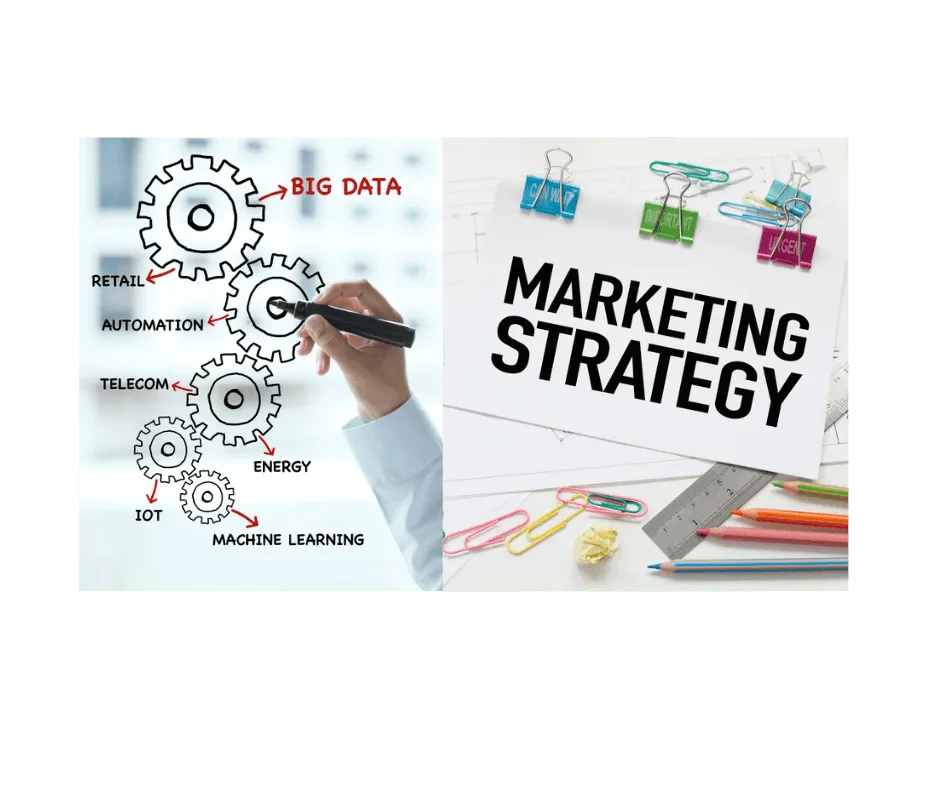
Deciphering Big Data: An ocean of information at your fingertips
Big Data, also known as big data or megadata, is a pervasive force in today’s digital world. It is a set of technologies and practices designed to :
Store massive volumes of data,
Manage information in different formats,
Process this data rapidly, sometimes even in real time.
This brief definition of Big Data enables us to understand how it can be used to support a company’s marketing objectives.
The era of data-driven marketing
Making decisions based on solid data is often more effective than relying on intuition or instinct. Initiatives based on quantitative findings have a higher probability of success. Big Data has revolutionized the way companies make decisions, maximizing their potential for commercial success.
Gone are the days of the authoritarian marketing manager making decisions based on gut instinct. Instead, we need to ask relevant questions and justify our actions with hard numbers. What does the data tell us? Where can we find this information? Which analytical models should we use? What is the probability of achieving the desired result?
Harnessing Big Data for effective marketing
In the age of data-driven marketing, effective data exploitation is essential to stay competitive. Combining a company’s different data can reveal new insights, which can be used to drive more impactful actions:
Understand customers to better meet their needs.
Personalize the marketing mix in near-real time and on a large scale.
Monitor trends to anticipate business opportunities.
Understand which processes work and reproduce the most effective marketing mechanisms.
Use customer data intelligently to reshape the offer according to consumer needs.

Tools for the Big Data era
Centralizing and storing data are the first steps in taking advantage of Big Data. Companies need to combine their internal and external data to make sense of these masses of information.
Data can be stored in data warehouses or data lakes. Some companies prefer data virtualization, which facilitates data access for data scientists.
Cloud-based data warehousing solutions, such as Google Big Query, make it possible to combine data at low cost, without the need for IT infrastructure. However, these data warehouses need to be integrated into a larger system to be fully effective.
Specialized software offers a centralized view of your customers and optimized management of structured and unstructured data.
Data Management Platforms (DMPs) offer another solution. These data management platforms enable anonymous user profile data to be collected, centralized, processed and segmented, improving digital efficiency measurement and optimizing online advertising targeting.
Using Big Data to shape the future of marketing
Data plays a crucial role in modern marketing strategies. However, data is only useful if it is used effectively. This means combining different data sources to obtain key information, which can then be used to adapt marketing strategies.
Successfully combining data relies on advanced technologies and the expertise of IT specialists. So it’s essential to team up with the right technology partners and recruit the right talent.
It’s also important to pay attention to data quality. Inaccurate, obsolete or incomplete data can distort results. Before you start, it’s advisable to clean up your data and, if necessary, call in specialists to audit your databases, especially CRM databases.
Finally, it’s important not to rush things. It’s best to progress in stages, starting with simple scenarios and gradually increasing the complexity as the company learns to exploit its data effectively. Continuously measuring the return on investment (ROI) of this type of project is a good practice that will enable you to steer your Big Data transformation in the right direction, creating ever more value for your marketing.