Fintech trends 2024-2025: new opportunities for Quebec SMEs
Quebec SMEs are evolving in a context where financial technologies (fintech) and AI are profoundly transforming the way they sell, invoice, get paid and build customer loyalty. Between the rise of digital payments, billing automation, the rise of e-commerce and the accelerated adoption of artificial intelligence, 2024-2025 offers fertile ground for those wishing to optimize their operations and profitability. According to the Bank of Canada’s 2024 report, over 60% of Canadians now regularly use digital payments, a trend that is accelerating among businesses. Meanwhile, a BDC 2024 survey indicates that some 70% of entrepreneurs across the country see digital transformation as essential to their growth.
In this article, we explore the main fintech trends 2024-2025 and the concrete opportunities they represent for Quebec SMEs: payment and billing automation, integration of payment solutions with e-commerce, strategic use of CRM and AI, as well as the modernization of digital infrastructure (websites and online stores). The aim is to help you better understand these developments so you can make informed decisions, aligned with the reality of the Quebec market and your internal capabilities.

1. Digital payments and automated invoicing: immediate leverage for cash flow
The first major fintech trend directly affecting Quebec SMEs is the rise of digital payments and automated invoicing solutions. Payments Canada’s 2024 report indicates that over 80% of consumer transactions in Canada now involve some form of digital payment (card, contactless, mobile wallet, electronic transfer). This consumer habit is gradually being transferred to B2B relationships: SMEs that offer flexible payment methods get paid faster, and reduce overdue accounts.
For an SME, moving from a « check + manual follow-up » model to an integrated online invoicing and payment system is a game-changer. We generally observe :
- Reduced payment times: some North American studies report improvements of 20-30% in average payment times when the invoice contains a secure online payment link.
- Fewer errors and less administrative time thanks to automated invoicing, reminders and reconciliation.
- Better visibility of cash flow with real-time dashboards.
In Quebec, SMEs in professional services, construction, retail and private healthcare particularly benefit from these innovations. For example, a B2B services firm can automatically send invoices as soon as a mandate is completed, offer payment by pre-authorized card or transfer, and synchronize everything with its CRM to track customer accounts.
To maximize these benefits, it’s important not just to multiply payment methods, but to integrate them intelligently into your digital processes:
- Connect your payment systems to a high-performance CRM to track payments, reminders and customer histories; see CRM management and sales automation.
- Offer online payment directly from your business website or secure customer area.
- Automate payment reminders with personalized, AI-powered emails or SMS messages.
Artificial intelligence and conversational chatbot technologies can also step in to answer questions about invoices, explain payment terms or offer 24/7 support. By 2024-2025, these tools will become accessible in cost and complexity, even for structures with fewer than 20 employees.
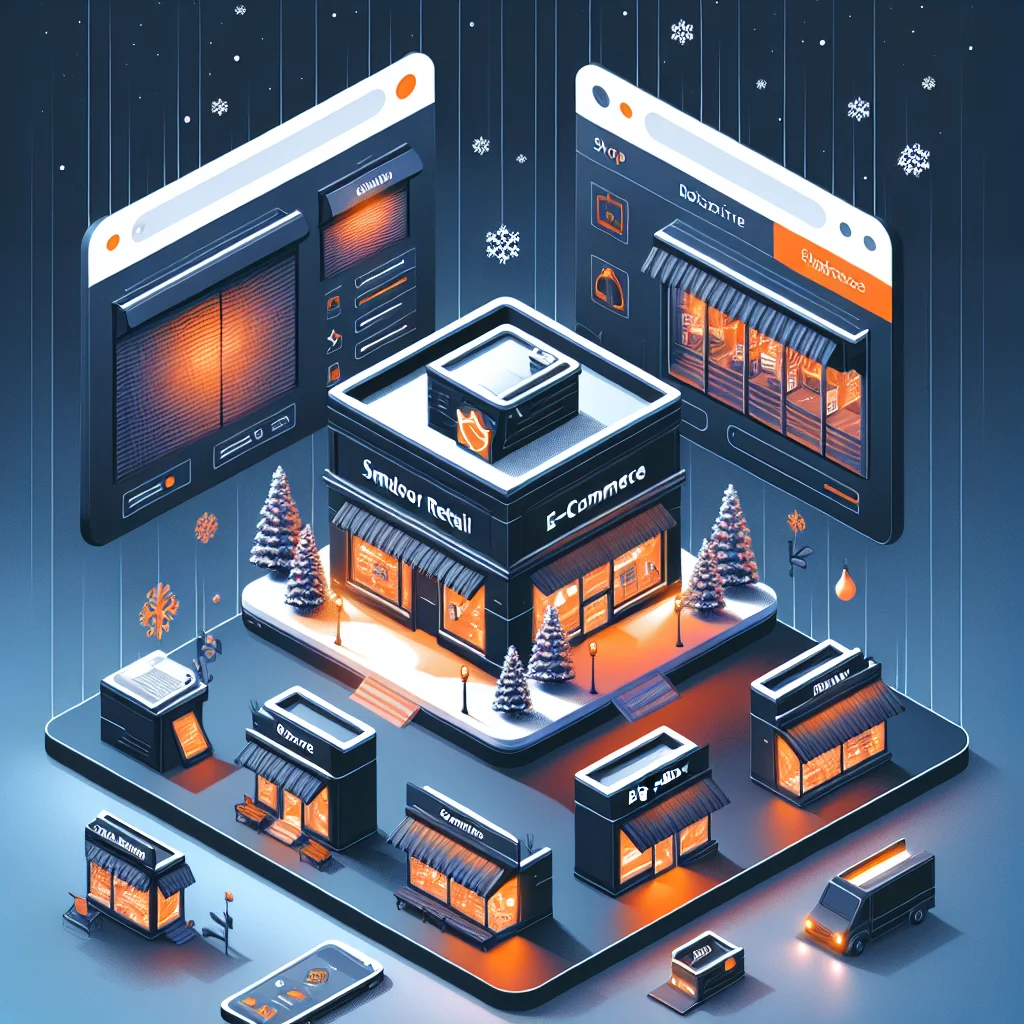
2. E-commerce and integrated payments: capturing local and international demand
E-commerce is no longer the preserve of the big banners. According to data compiled by Statistics Canada and industry associations, online retailing continues to grow in Canada, regularly exceeding 10% of total sales in certain segments, with much higher peaks in specialized categories. For Quebec SMEs, 2024-2025 is a pivotal period: consumers have become accustomed to buying online, but competition is still fragmented in many niches.
E-commerce fintech trends focus on three main areas:
- Integrated payments and reduced friction: integration of payment gateways (cards, Interac, digital wallets) directly in the store, with secure storage of information for recurring orders.
- Financing offers and BNPL (Buy Now, Pay Later): for certain sectors (furniture, equipment, professional services), offering staggered payment options can increase the average shopping basket.
- Internationalization made easy: multi-currency acceptance, automatic tax calculation, and logistics solutions linked to payment systems.
For a Quebec-based retailer, manufacturer or service provider, not having an online presence or offering a complex purchase path is now tantamount to leaving money on the table. Conversely, SMEs that invest in a well-designed online store, coupled with modern payment solutions, observe :
- Increased sales via additional channels (website, social networks, marketplaces).
- Greater resilience to local fluctuations (purchases from other regions or countries).
- Richer data collection to optimize prices, promotions and inventory.
Fintechs play a key role here, providing secure payment bricks, fraud prevention modules, subscription management and recurring billing. Coupled with a site developed by an agency that masters the web,AI and e-commerce, these solutions become a real engine for growth.
In 2024-2025, we’ll also see the emergence of more advanced integrations: for example, linking the online store to a CRM to track purchase history, automate abandoned basket relaunches and segment marketing campaigns. This enables SMEs to compete, on their own scale, with the customer experience offered by the big players.
3. CRM, AI and data analysis: turning information into revenue
Beyond payments themselves, one of the major developments for Quebec SMEs lies in the combined use ofAI, CRM and transaction data. According to a recent survey of SME executives in Canada (cited by various industry reports in 2023-2024), more than half of companies that have invested in customer relationship management (CRM) tools are seeing an increase in sales or customer lifetime value (LTV).
In 2024-2025, these tools will become more intuitive and, above all, better integrated with fintech solutions:
- Direct connections with payment gateways: each transaction automatically feeds the customer file in the CRM.
- Advanced segmentation using purchasing behavior data (frequency, average basket, products purchased, payment times).
- Marketing automations (e-mails, SMS, Messenger or WhatsApp messages) triggered by financial events: new order, unpaid invoice, upcoming renewal.
AI, and intelligent chatbots in particular, are playing a growing role in this dynamic. They can :
- Automatically answer frequently asked questions about billing, payment methods or due dates.
- Propose personalized offers based on purchase history or customer segment.
- Help your internal teams rapidly produce reports, forecasts or profitability analyses by customer or product.
For Quebec SMEs, the challenge is not so much access to these technologies as their structured implementation. Many companies find themselves with several unconnected systems: an invoicing solution here, a CRM there, an online store elsewhere. The opportunity for 2024-2025 is to consolidate this ecosystem around a clear architecture:
- A central CRM as the « heart » of customer relations.
- Connectors to the online store, payment gateways and accounting tools.
- Layers of AI (chatbots, automations, report generation) to reduce manual workload.
Companies that follow this path generally find :
- Better lead conversion thanks to rigorous follow-up ;
- An increase in the average basket via targeted cross-sell and upsell ;
- Reduced time spent on administrative tasks, freeing up time for business development.
4. Modernizing your digital infrastructure: websites, security and compliance
Modern fintechs and payments cannot be effectively deployed on an aging digital infrastructure. An unsecured, non-mobile-friendly or difficult-to-update website becomes a direct brake on the adoption of new trends. What’s more, security and compliance requirements (data protection, PCI-DSS standards for payments, privacy laws) are becoming increasingly stringent in Canada and Quebec.
For SMEs, the 2024-2025 period is ideal for reviewing digital foundations:
- Website redesign to offer a fluid, fast and mobile-first user experience. A site that loads quickly and clearly guides the user to contact or purchase significantly increases conversions.
- Integration of fintech modules (online payment, customer portal, order tracking) directly into the site, rather than sending users to external pages that may not be very reassuring.
- Security upgrade: up-to-date SSL certificate, good password management practices, automated backups, reliable hosting.
A modern website acts as the centerpiece of your fintech ecosystem: it’s the main point of entry for your customers, the place where you can present your payment options, online offers, and even integrate AI-based virtual assistants to guide your visitors.
At the Quebec level, it is also important to consider :
- Bilingualism (French and English) to capture a broader customer base.
- Compliance with local privacy laws.
- Adapting to the specific payment habits of the Canadian market (Interac, major credit cards, popular e-wallets).
Many SMEs think that these upgrades are costly or complex. In reality, the 2024-2025 ecosystem offers an abundance of modular solutions, where you can move forward step by step: start with a robust professional site, add a small online store, configure a CRM, integrate payments, then gradually automate with AI. An agency like Nuaweb, which specializes in AI, web design, CRM, e-commerce and video production, can guide you through this process in a structured way that suits your budget.
Conclusion: how to take concrete advantage of fintech trends 2024-2025 in Quebec
Fintech trends 2024-2025 offer Quebec SMEs a unique opportunity to gain in efficiency, profitability and customer service quality. The rise of digital payments, billing automation, e-commerce integration, the power of CRM and AI, as well as website modernization, are no longer options reserved for large companies: they are now accessible and, above all, strategic levers for small and medium-sized organizations.
Rather than tackling these issues in a piecemeal fashion, it makes sense to take a holistic view of your digital transformation:
- Where do you waste the most time (billing, payment follow-up, customer service)?
- Which channels are already generating sales, and could be amplified by digital channels (website, social networks, word-of-mouth)?
- What tools do you already have (accounting, CRM, store) that could be better integrated?
Nuaweb works with Quebec SMEs to turn these questions into concrete action: auditing your current situation, defining a clear roadmap, developing or redesigning your site, setting up a high-performance CRM, creating your online store, integrating payments, automating with AI, and even video production to enhance your offerings.
If you’d like to discuss the best fintech opportunities for your business (online payments, CRM, AI, e-commerce, web redesign), schedule a free consultation with a Nuaweb expert now via our Contact page. Together, let’s turn the trends of 2024-2025 into tangible competitive advantages for your Quebec SME.